Twelve People, One Room, Zero Excuses: The Case for Playing Like It's the Super Bowl

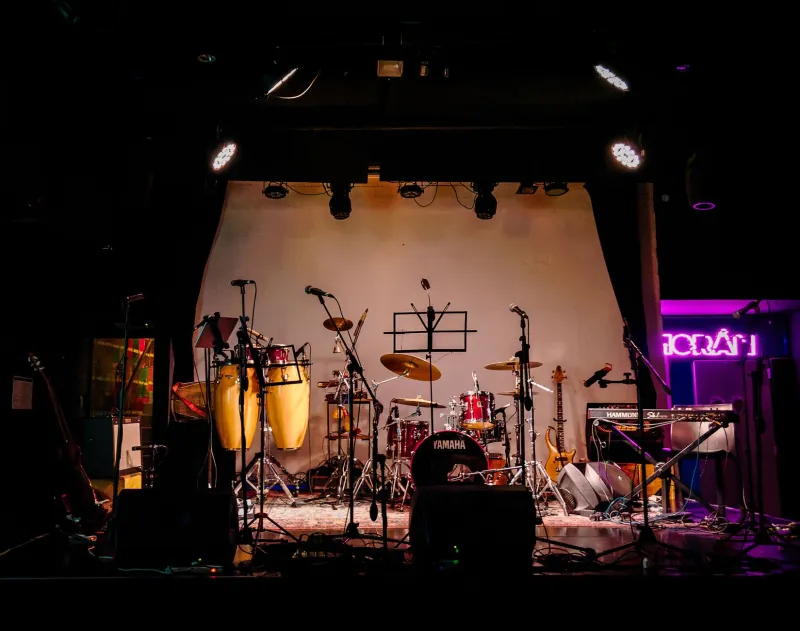
There's a particular kind of heartbreak that hits around 7:45 PM on a weeknight when you're plugging into a house PA at a coffee shop in, say, Winston-Salem, and counting the audience. Not estimating. Counting. Twelve. Maybe fourteen if the barista's roommate shows up.
Every performer knows this moment. And every performer has a choice to make in it — a choice that reveals more about their career trajectory than any showcase or festival slot ever could.
The Math Nobody Does
Here's the arithmetic that separates working artists from hobbyists: twelve people who feel like they know you are worth more than two hundred who barely looked up from their phones.
Think about your own life. You don't become a devoted fan of someone because you saw them in a stadium. You become a devotee because you were in a room where they told the story behind the song, where they learned your name, where you felt like the whole thing was happening for you. Superfans are manufactured in small rooms. Always have been.
The problem is that small rooms feel like failure. They feel like the career isn't working. So artists phone it in — shorter set, less energy, a vibe that says "I know this doesn't count." That's the actual mistake. Not the turnout. The turnout is just data. The apathy is the wound.
Performing for the Room You Wish You Had
I've watched artists bomb in tiny rooms and I've watched artists ignite in them, and the difference is almost never talent. It's interpretation. One artist sees twelve people and thinks, "This is embarrassing." The other sees twelve people and thinks, "Twelve people chose to be here on a Tuesday. In this economy. After work."
That second interpretation changes everything about how you move through a set. You make eye contact. You learn that the woman in the corner just got off a double shift. You play the deep cut because the guy in the flannel asked about it last time. You treat the room like a living room, because functionally, it is one.
Audiences can smell the difference between a performer who's performing at them and one who's performing with them. In a big venue, that smell gets diluted. In a coffee shop, it's the entire experience.
The Follow-Up Is the Real Show
Here's where most artists leave money and momentum on the table: the show ends and they pack up like nothing happened. But a small audience is a list. Twelve email addresses, twelve Instagram follows, twelve people who will remember you specifically because there was no crowd to hide in.
The practical playbook is embarrassingly simple:
- Name-drop the regulars. If someone's been to three shows, mention it from stage. Watch them become your street team.
- Capture the room. A phone photo of the whole space — even a small one — is more convincing content than a cropped shot of a big crowd. Intimacy reads as authenticity.
- Follow up within 48 hours. Not a blast. A note. "Great seeing you Tuesday — here's the song you asked about." That's how a stranger becomes an evangelist.
- Invite them into the next chapter. Small-room audiences will fund your album, host your house concert, and drag friends to the next gig. But only if you treat them like insiders, not receipts.
Small Rooms Are Auditions You're Already Winning
There's a final reframe worth sitting with: the industry people who matter — bookers, managers, sync agents — often show up to small gigs precisely because they're small. They want to see what you do when nobody's making you. A packed festival slot proves you can ride a wave. A Tuesday coffee shop proves you're the real thing when the tide's out.
So the next time you count twelve heads in a room, don't mourn the arena. Recognize the situation for what it is: the most concentrated audience you'll ever have, the easiest names you'll ever learn, and the cheapest superfans you'll ever make.
Play it like the Super Bowl anyway. The twelve people watching will never forget it — and they're the ones who'll fill the arena later.