The Show Ended. Your Career Shouldn't Have: A Post-Gig Playbook for the Quiet Weeks
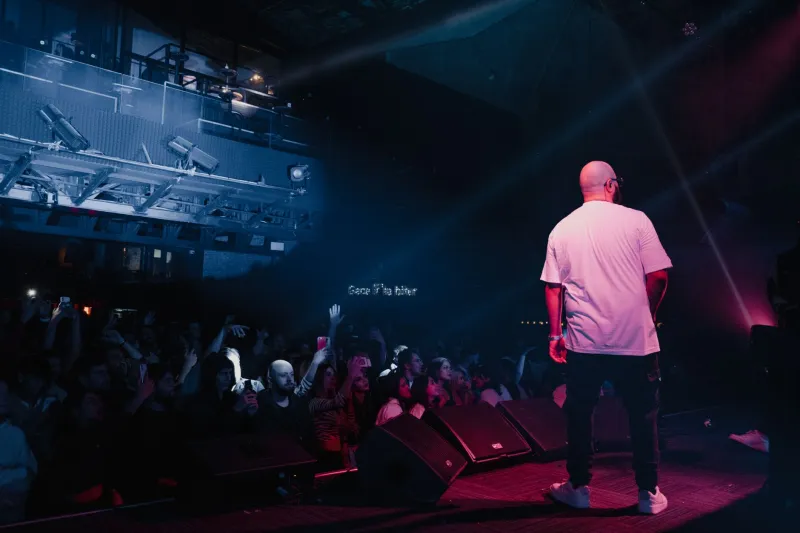
There's a specific kind of high that comes with walking off a stage that just clapped for you. Your ears are ringing, somebody wants a selfie, and your phone's blowing up with 'you killed it' texts. It's tempting to ride that wave straight into a week of doing absolutely nothing.
I get it. You earned the rest.
But here's the part nobody warns you about: the weeks after a gig are either the most productive stretch of your year or a total dead zone — and the difference comes down to whether you treat the show as the finish line or the starting gun.
The Applause Is Not the Asset
Let's be honest about what a gig actually gives you. It's not the paycheck, which for most of us barely covers the gas money and the post-show tacos. It's not even the performance itself, which lasted all of 45 minutes.
What a gig gives you is raw material. Contacts. Footage. Social proof. A booker who now knows your name. And every one of those assets has a shelf life.
That venue manager who loved your set? In three weeks, they've booked six other acts and your face is a blur. That crowd member who said 'I need to see you again'? They'll forget you by Monday if you don't give them a reason not to. The energy in that room was real, but energy doesn't compound. Systems do.
Week One: Harvest Everything While It's Fresh
The first seven days after a show are your capture window, and speed matters more than polish.
Grab the footage before you watch it. Whoever filmed the set — a friend, a hired videographer, the venue's house camera — get those files now. Don't wait until you're 'in the mood to edit.' Then pull the best 30 to 60 seconds. Not the whole set. The moment the room leaned in. That clip is your booking pitch, your social content, and your proof of concept all in one. A booker watching 40 seconds of an audience genuinely reacting to you is worth more than a thousand words of 'high-energy performer with wide appeal.'
Collect the contacts you didn't know you made. Tag yourself in photos people posted. Reply to every story and comment — not with a generic thanks, but like a person. If the venue has a mailing list or a QR code sign-up, find out how many emails came through and get access to them. Those are warm leads who already spent an evening with you.
Write down what actually happened. Not the highlight reel — the truth. Which joke landed, which song lost the room, where the energy dipped. Do this within 48 hours or it's gone. This is your private rehearsal notes, and six months from now it'll be the most honest feedback you own.
Week Two: The Follow-Up That Isn't Cringe
Here's where most performers ghost, usually because they don't know what to say. So let's make it simple.
Email the booker within a week. Short, warm, specific. Thank them by name, mention one concrete thing about the night ('the sound in that room is unreal'), and include your best clip. Then — and this is the part everyone skips — plant the next step: 'I'd love to come back when the fall calendar opens up. Who's the best person to loop in on that?'
You're not asking for a favor. You're making it easy for them to rebook someone they already know doesn't flake. Venue bookers are drowning in cold outreach from strangers. You are no longer a stranger. Act like it.
Touch the crowd, lightly. Post the clip. Share a photo with a caption that names the venue and the city — that's not just gratitude, it's SEO for your next gig there. If you collected emails, send one message: a thank-you, a clip, and a single link to where they can hear more. One touch. No drip campaign. Nobody joined your list to get marketed at.
Weeks Three Through Twelve: Turn One Night Into the Next Three
This is the stretch where momentum either compounds or evaporates, and the work is less glamorous.
Pitch the follow-on gigs while the clip is fresh. That 40-second video plus a line like 'we drew a solid crowd on a Tuesday at [venue]' is a legitimate pitch to the three similar venues in the next town over. Bookers talk to each other. A room that went well is a referral.
Update your materials with the receipts. New clip on your landing page. The venue name added to your bio. If a promoter or booker said something kind in writing, ask if you can quote them. 'One of the best crowds we've had all year — [Venue], [City]' does more work on your page than another paragraph of self-description ever will.
Schedule the next thing before the doubt creeps in. Every performer knows the post-gig fog — that weird flat week where you wonder if any of it's working. The antidote isn't motivation, it's a calendar invite. An open mic, a livestream, a song drop, a coffee with another local act. Momentum is mostly just not stopping.
The Quiet Weeks Are the Whole Game
Here's the reframe I want you to sit with: the performance is the easy part. You've rehearsed it. You know exactly what happens for those 45 minutes. What happens in the 90 days after is unscripted, and that's precisely why it separates the people who book steadily from the people who perform twice a year and call it bad luck.
The lights go down. The room empties out. And in the silence, one performer posts a clip, emails a booker, and books the next gig — while the other one waits to feel inspired again.
Be the first one. The applause fades either way. What you do in the quiet determines whether anyone claps next time.