Folded Shirts and Fortune: How the Merch Table Becomes Your Best Booking Agent
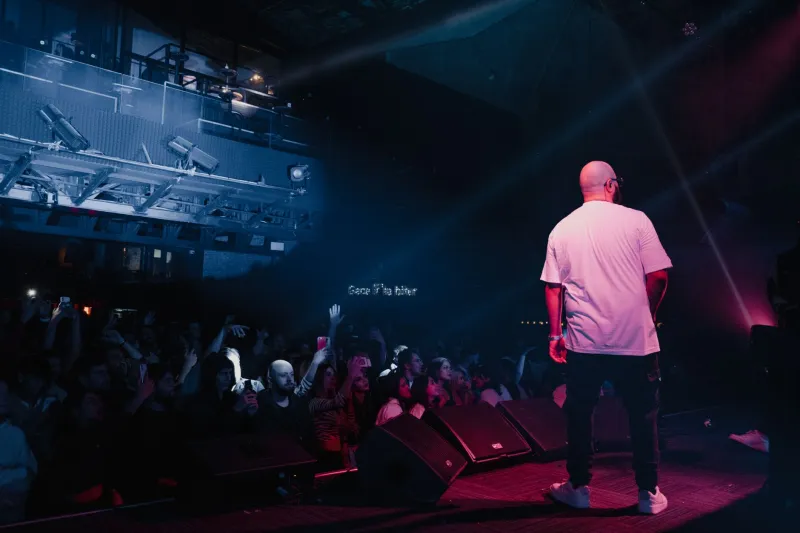
You walked off stage. The crowd loved you. And then you disappeared into the green room while some friend-of-a-friend slumped behind a folding table, scrolling their phone next to a stack of shirts nobody's buying.
That table? It just cost you money you'll never know about. Because the merch table isn't logistics — it's your second stage, and most performers are bombing on it every single night.
The Table Is the Only Place Fans Can Actually Talk to You
Think about the flow of a live show in the US. Doors, opening act, your set, lights up, and then — a small percentage of the crowd migrates toward the back of the room. These aren't random people. These are the folks who just decided, mid-set, that they want more of you in their life.
That's a hand raised. And if the response they get is a distracted volunteer and a card reader that doesn't work, you've turned a superfan-in-progress into someone who streams you occasionally and forgets your name by March.
When I work the table myself — and yes, even when I'm sweaty and my voice is shot — three things happen:
- I learn who my audience actually is. Which design moves first? What do people ask for that I don't have? That's free market research.
- I collect the follow. "Are you on Instagram? Here, scan this." A QR code on the table converts a $30 shirt buyer into a lifelong follower.
- I plant the next show. "We're back in town in October — come find me." That's a ticket presold by conversation, not by algorithm.
No helper can do any of that for you. They can hand you a shirt. They can't tell someone why the lyric on the back matters.
Design for the Person Who Wasn't Going to Buy Anything
Here's the mistake almost everyone makes: merch designed for existing fans. Song titles on the front, your name in a font only you can read, a tracklist on the back like it's a vinyl sleeve.
A stranger at the venue doesn't want a souvenir of your setlist. They want a shirt that looks good at brunch in Austin or on a subway platform in Chicago. The best-performing merch I've ever seen followed one rule: would someone wear this if they'd never heard of me?
That means:
- One bold graphic, not ten ideas. Clean, striking, wearable.
- Your name small, not screaming. They know who you are. Their friends don't yet — that's the point.
- A range of price points. A $30 shirt is your anchor, but stock $10 stickers, $15 totes, and a $5 item so the person with eleven dollars left still leaves as a customer.
- Something weird and limited. A hand-numbered poster or a tour-exclusive item gives the true fans a reason to buy even when they own everything else.
And for the love of all things holy, order sizes beyond small and large. Nothing kills a sale faster than "sorry, we're out of mediums."
Price It Like a Professional, Not a Nervous Friend
Underselling your own merch is a branding problem disguised as generosity. When your shirt is $15, you're telling the room what you think you're worth — and the room believes you.
A workable structure for a US club or theater gig:
- Stickers/totes: $5–$15
- Shirts: $30–$35 (yes, really — print quality justifies it, and so does the show they just watched)
- Limited items: $40–$60
The people buying at a show have already paid for a ticket, parking, and two overpriced drinks. They've demonstrated they'll spend money on a night out. Your $30 shirt is not the obstacle. A bad table is.
Run the Table Like a Set, Not a Chore
You rehearse your set. Give the table the same respect:
- Announce it from stage. "I'll be at the merch table right after this — come say hi." That single line moves a shocking percentage of the room to the back.
- Cash and card, always. A Square or Venmo setup takes ten minutes and pays for itself the first night.
- Work it during the opener too. Early birds buy when there's no line.
- Track what sells. A notes app tally per show tells you what to restock and what to retire.
Do the math on a typical night: 150-person room, you personally working a well-designed table, 10–15% conversion is realistic. That's $450–$650 on top of your guarantee. On a good night, the table pays your fee twice over.
But the money is honestly the smaller prize. The person wearing your shirt to a bar in Nashville next month is a walking advertisement. The person who bought a poster and followed you on Instagram is first in line when you announce your next date. Merch isn't a side hustle bolted onto performing.
It's the moment a stranger decides you're worth remembering. Don't hand that moment to a folding table and a phone-scrolling friend.
Show up. Stand there. Tell them why it matters.
That's the second set — and it might be the one they talk about longest.