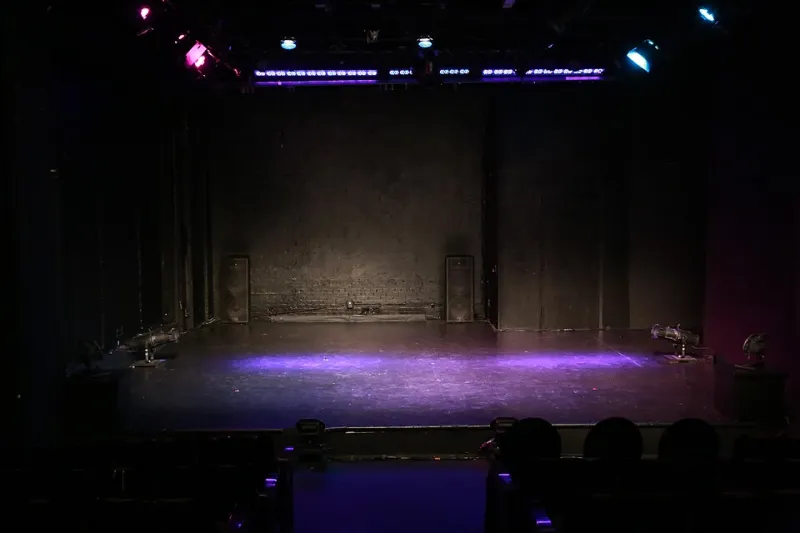
The Room Is Back: Why the Algorithm Era Made Real Performers More Valuable Than Ever
Photo: Internet Archive Book Images, No restrictions, via Wikimedia Commons
For about ten years, the story we were all told went like this: the future is digital. Build a following online, chase the playlist placement, go viral, and the live shows will follow. A whole generation of performers optimized for a rectangle — perfecting their fifteen-second hooks, their thumbnail faces, their comment-section banter.
And then something funny happened. People got tired.
The Streaming Hangover Is Real
Talk to any venue booker in Nashville, Austin, Brooklyn, or Portland right now and you'll hear the same thing: demand for live shows is up, good rooms are booking out months in advance, and audiences are showing up earlier and staying later. After years of experiencing music as background noise — something that plays while you do dishes and scroll — people are remembering what it feels like to be in something. To sing a chorus with two hundred strangers. To watch an artist notice that the room is restless and adjust on the fly.
Streaming gave us infinite access and zero intimacy. That trade stopped feeling worth it.
What the Rectangle Couldn't Teach
Here's the part I find genuinely satisfying: the skills that matter most right now are the ones that can't be faked through a phone camera. Reading a room. Holding attention for ninety minutes without an edit button. Knowing when to shrink a song down to a whisper because the crowd came to lean in, not scream along.
The performers who spent the streaming era treating live shows as a marketing chore — something to endure between content shoots — are struggling now. The ones who kept honing their presence in front of real humans, even small ones, even badly paid ones, are suddenly the names venues fight over. The pendulum didn't just swing back. It swung back toward exactly what they'd been practicing.
Presence Is the New Scarcity
Anybody can be available. Availability is free and infinite and worth almost nothing. What's scarce now is attention — a full, undivided, phone-in-the-pocket hour where an audience gives itself to a performer and trusts them not to waste it.
That's the actual product. Not the songs, which everyone's heard. Not the videos, which everyone's seen. The evening. The shared experience. The thing people describe to their coworkers on Monday morning.
What to Do With This Moment
If you're a performer, stop measuring yourself against stream counts. Start measuring the room. How many people came back from your last show? Did they bring friends? Did the venue rebook you without being asked? Those numbers are the ones the post-streaming era actually pays for.
The audiences are out there, hungry for something real. The only question is whether you've spent your time becoming someone worth showing up for — or someone worth skipping.