Fans Don't Buy Songs. They Buy the Feeling: Finding Your Emotional Product

Photo: Birgit Fostervold, CC BY-SA 4.0, via Wikimedia Commons
Here's a question that should keep you up at night, in a good way: when someone hands you twenty bucks at the merch table, what are they actually buying?
If you said "a t-shirt," you're thinking like a vendor. If you said "my music," you're thinking like an artist. Both answers are wrong, and understanding why might be the most important business lesson of your career.
Fans buy feelings. Always have, always will. The song is just the delivery mechanism.
The Receipt Nobody Talks About
Think about the last concert that wrecked you — in the best way. You didn't leave talking about the chord progressions. You left saying things like "that was the best night of my life" or "I needed that." You paid for parking, tickets, a $9 beer, and maybe a hoodie, and what you walked away with was a state of mind.
Psychologists and marketers have known this forever. People don't purchase products; they purchase transformations. A gym doesn't sell memberships, it sells the version of you that feels strong. A steakhouse doesn't sell beef, it sells celebration. And you don't sell songs.
You sell one of a handful of core emotional payoffs:
- Escape — the three-minute vacation from a life that's a lot right now
- Connection — the feeling of being seen, understood, less alone in a crowded world
- Status — the identity boost of being the person who discovered you first
- Memory — the soundtrack to a summer, a wedding, a road trip, a grief
Every artist who's ever filled a room is selling at least one of these. The problem is most performers have never named theirs.
Naming Your Emotional Product
Sit with this exercise for ten minutes — actually do it, don't skim.
Step one: Read the comments. Go to your last five posts, your YouTube comments, your Bandcamp reviews. Strip out anything about the music itself ("great vocals," "sick guitar tone") and look for what's underneath. "This got me through my divorce." "I play this on my drive home every day." "You're the only one who gets it."
Those sentences are your customers telling you what's on the invoice.
Step two: Ask three fans directly. Not "what do you like about my music?" — that gets you polite nonsense. Ask: "When do you listen to me? What's happening in your life when my stuff hits right?" The answers will cluster. Maybe it's late-night drives. Maybe it's getting ready to go out. Maybe it's after a hard shift at the hospital.
Step three: Write it in one sentence. Something like: "I give burned-out twenty-somethings permission to feel hopeful again," or "I'm the soundtrack for people who grew up too fast." That's your emotional product. That's what you actually sell.
Selling the Same Feeling Everywhere
Here's where this stops being a journaling exercise and starts making you money. Your emotional product should be legible at every touchpoint — because right now, most artists are accidentally selling different products in different places.
Your live show. If your emotional product is connection, but you spend the set talking at the crowd like a press release, you're breaking your own promise. If it's escape, but you stop the momentum every three songs to plug your Venmo, you're yanking people out of the world you built. Design the setlist, the banter, even the lighting around the feeling. Everything in service of it.
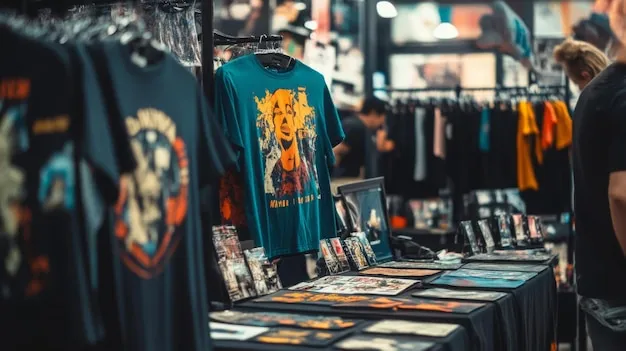
Your merch. A shirt that just says your band name is a receipt. A shirt that says something your fans wish they could say out loud is armor they get to wear on Monday morning. Merch is wearable emotion. Price it, design it, and display it accordingly.
Your social media. If your emotional product is escape, your feed shouldn't be a to-do list of gig announcements. Give people the feeling for free — clips that transport, captions that transport — and the gig announcements become invitations rather than interruptions.
Your streams. Even your track order matters. The intro of your most popular song is the front door of the house you're inviting people into. Does it feel like the promise you made?
Why Consistency Beats Talent (Again)
You've probably noticed that the acts who win in your scene aren't always the best players. They're the ones who deliver a reliable feeling, every time, everywhere. Reliability builds trust. Trust builds a fanbase. A fanbase — not a song — is what gets you booked, streamed, and paid.
The uncomfortable truth is that fans are forgiving about a flubbed note and unforgiving about a broken promise. If they came for connection and got a transactional, going-through-the-motions set, they don't come back — even if you sounded great.
So this week, do the homework. Read the comments. Ask the three fans. Write the sentence. Then audit your show, your merch table, and your feed against it.
Because the music is the product, sure. But the feeling is the reason. Sell the reason, and the music moves itself.